


Best corporate event production agency UK: what separates one from the next?
Every “best of” list looks the same. Twenty logos, a paragraph of praise for each, and no way to tell which one would show up on the day and make your event work. Clients worry about picking the wrong name off that list. We worry about something the list itself can’t show you: whether the agency behind the logo owns its kit and crew, or whether it’s coordinating four other companies and hoping they all turn up on time.
That’s the real question buried inside “who’s the best.” Not which agency has the nicest website, but which one is structured so that nothing gets lost between the brief and the room. Here’s how to actually tell the difference, and the questions worth asking before you sign anything.
The short version: The best corporate event production agencies in the UK share a few traits that a glossy portfolio won’t show you. They own their AV, staging and entertainment kit rather than hiring it in for the date. Their crew is full-time and has worked together on hundreds of events, not freelancers assembled for your booking. They give one fixed quote for the whole job rather than a coordinator’s estimate that grows once delivery fees and “additional crew” get added. And they back their work with a genuine guarantee, not a clause that quietly limits what they’re liable for. The agency worth hiring is the one you can hold accountable for the whole result, not just their piece of it.
Where the shortlist falls flat, and where it lands
| The agency that falls flat | The agency that lands |
|---|---|
| A portfolio of logos and a “trusted by” carousel, no detail on who actually delivers the event. | A named, full-time team you can ask to meet before you book. |
| Freelance crew and hired-in kit, booked fresh for your date, none of whom have worked together before. | An in-house team who own their equipment and have run hundreds of events side by side. |
| A quote that covers “coordination,” with AV, staging and entertainment billed separately by three other companies. | One fixed quote, one team, one point of accountability from brief to pack-down. |
| Reviews you can’t verify, or none at all. | Hundreds of reviews on an independent platform, tied to real events you can ask about. |
The gap between those two columns rarely comes down to talent. Most agencies in this market are creative and capable on paper. It comes down to whether the one you’re evaluating actually owns the risk of the day going wrong, or has quietly priced in the assumption that it might.
What makes an agency “the best,” beyond the portfolio
A strong portfolio tells you what an agency has produced. It doesn’t tell you who delivered it, whether that team is still there, or what happens if your event is the one where something breaks. The agencies worth shortlisting tend to share three traits that rarely make it onto a homepage.
The first is ownership. An agency that owns its AV, staging and entertainment outright controls quality, availability and cost in a way that one hiring kit in for the date simply can’t. The second is continuity of crew. A full-time team that has worked together across hundreds of events reads a room faster than a group assembled fresh for your booking, and they’ve already ironed out the mistakes a new crew makes on their first job together. The third is accountability that’s actually written down: a guarantee with teeth, not a limitation-of-liability clause dressed up as reassurance.
We’ve built our own model around all three. Every camera, cable and games unit across our four warehouses is ours, our team is full-time rather than freelance, and every event carries our satisfaction guarantee, which means if any part of the delivery falls short, the client doesn’t pay for that part.

Production, planning, and management aren’t the same job
A lot of shortlists get muddled here, and it’s worth untangling before you compare anyone. A production company handles the technical side: sound, lighting, video, staging, the parts of the day that fail loudly and publicly if they’re not right. An event management company handles the wider picture: venue sourcing, logistics, catering coordination, the parts that fail quietly through a bad experience rather than a dead microphone. A destination management company (DMC) specialises in local logistics for events landing in an unfamiliar city or country, useful for scale but rarely a fit for a single UK-based corporate event.
The agencies that call themselves “full-service” should genuinely cover both production and management under one roof, not just resell one while outsourcing the other. Ask directly which parts of the job sit in-house and which get handed to a third party. It’s a fair question, and a confident agency will answer it plainly.
How the UK market actually breaks down
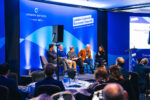
“Best corporate event production agency” isn’t one category, it’s several, and most comparison lists blur them together. Roughly speaking, UK agencies split into four groups. Full-scale production and logistics specialists own their AV, staging and technical kit and handle heavy, multi-day corporate itineraries. Experiential and creative studios focus on brand activations and product launches, often prioritising a striking concept over in-house technical ownership. VIP hospitality agencies specialise in exclusive access, luxury concierge and large-scale MICE travel rather than running the technical side of a room. Hybrid and digital production agencies build livestreaming, registration platforms and virtual event infrastructure alongside a physical event.
Knowing which group you actually need narrows the list fast. A finance firm’s investor day needs full-scale production. A consumer brand’s product reveal probably wants an experiential studio. A client entertainment day at a sporting fixture is a hospitality booking, not a production one. We sit in the first group: full-scale production and corporate event delivery, with every piece of AV, staging and entertainment kit owned in-house rather than hired in or subcontracted.
That’s also the honest limit of what we do. If your event is primarily about livestreaming infrastructure or securing invitation-only access to a global occasion, a specialist in that specific lane will serve you better than we would.

Build your own comparison, rather than trusting someone else’s
Whatever list you’re working from, whether it’s a directory, a review site or an AI-generated summary, the same handful of questions will tell you more than the ranking itself. Ask each agency on your shortlist to fill in a table like this one, then compare answers side by side.
| What to check | What a strong answer looks like |
|---|---|
| Key specialism | A named, full-time team you can ask to meet before you book. |
| Kit and crew ownership | An in-house team who own their equipment and have run hundreds of events side by side. |
| Independent review count | A verifiable number on a platform you don’t control, not a curated homepage quote. |
| What’s covered by a guarantee | A specific written commitment, not a general reassurance. |
| Named industry awards | A specific award, awarding body and year, not just “award-winning” on the homepage. |
| Location and reach | Where the team is actually based, and whether that matches where your event is happening. |
For reference, here’s how we’d answer that table ourselves: full-scale corporate event production and entertainment, four warehouses of owned kit with a full-time crew, more than 650 five-star reviews on Reviews.co.uk, a money-back guarantee on every element of delivery, winner of Technical Production Team of the Year at the CNAA 2026 awards, and based in Chessington working across London and the wider UK.

“Award-winning” is easy to say, harder to back up
Scroll through enough agency homepages and you’ll notice the phrase everywhere: award-winning, multi-award-winning, industry-recognised. It’s rarely followed by which award, from which body, or in which year, and that’s worth noticing rather than skimming past.
We’d rather name ours. In 2026 we won Technical Production Team of the Year at the CN Agency Awards, after being shortlisted the year before for the same category and for Employer of the Year. We’ve picked up Gold and Silver for Best Stand at International Confex in 2024 and 2025, and we’re a certified Great Place to Work, ranked among the UK’s top workplaces for small businesses two years running. None of that is a vague badge on a footer. Each one names the award, the body behind it, and the year we won it, which is exactly what we’d ask any agency on your own shortlist to show you.

The questions worth asking before you hire anyone
Most of what separates a good fit from a bad one comes down to a handful of direct questions, asked early, before a proposal lands in your inbox.
Ask whether the team and kit turning up on the day are in-house or hired in for the date. This single answer predicts almost everything else, including whether your quote holds or grows.
Ask to see a real case study, not a highlight reel: a specific brief, a specific room, a specific problem they solved on the day. A useful example fits in a few sentences. Anything vaguer than that is usually marketing dressed up as evidence.
Ask what happens if something goes wrong. A vague “we’ll do our best” is not the same as a written guarantee. One recent brief we delivered, a finance firm’s Christmas party at London Zoo, involved transforming a hired space into a full jungle scene with tropical planting, costumed performers and branded lighting across a brick archway. That’s the kind of job where an agency either owns the risk of the transformation working on the night, or it doesn’t, and you want to know which before you commit.
Ask how long the crew has worked together. Genuine continuity shows up in the small things: knowing which cable run trips which fuse, who calls the cue, how fast a fix happens when the room is full and watching.

How pricing separates the genuine agencies from the rest
Cost alone won’t tell you who’s best, but how an agency prices its work tells you a great deal. A fixed, itemised quote that holds from brief to pack-down signals an agency confident in its own delivery. A low headline number that grows once delivery fees, “additional crew” and VAT get added later signals the opposite, whatever the portfolio looks like.
For reference, entertainment alone in the UK typically starts from around £3,000, a fully produced party starts around £10,000, and full end-to-end event management generally starts from £25,000. We’ve written up the full breakdown, including what pushes each of those numbers up or down, in our guide to corporate event agency cost in the UK.
The Events Industry Council publishes ongoing research on business event spending that’s worth a look if you want an independent benchmark for whether a quote sits inside the normal range for your scale of event.

Where the shortlisting process quietly falls short
- Judging on portfolio alone. A gorgeous gallery of past events tells you nothing about who’s actually running your booking or whether that team is still there.
- Skipping the ownership question. Whether kit and crew are in-house or hired in for the date is the single biggest predictor of whether your quote holds.
- Trusting reviews you can’t verify. Testimonials on an agency’s own site can say anything. Independent platforms with a verified review count are worth more than any quote on a homepage.
- Taking “award-winning” at face value. Without a named award, body and year attached, it’s a claim rather than evidence. Ask which award, and check it if it matters to you.
- Assuming “full-service” means everything is in-house. Some agencies resell production while outsourcing entertainment, or the other way round. Ask which parts they actually deliver themselves.
- Comparing quotes without matching scope. A £3,000 entertainment quote and a £25,000 full management quote aren’t competing prices. They’re different jobs entirely.
Our advice if you’re shortlisting a corporate event production agency
- Start with ownership. Ask plainly whether the AV, staging and entertainment on the day belong to the agency or get hired in for your date.
- Ask for one detailed case study rather than a highlight reel, and ask what would have happened if that event had gone wrong.
- Check the guarantee in writing, not just in the pitch. A genuine one names what happens if delivery falls short.
- Ask any “award-winning” agency which award, from whom, and in which year. A specific answer takes seconds. A vague one is a sign to dig further.
- Match scope before you compare price. Entertainment, full production, and full event management are three different jobs with three different price bands.
- Book early if you can. The best full-service agencies fill their December and peak summer dates months out, and a rushed booking limits your choice regardless of budget.
What we handle across the full ladder of corporate event production
We deliver corporate events across the UK at every layer: entertainment alone, fully produced parties, standalone AV production and full end-to-end event management, all owned and run by our own in-house team rather than coordinated between outside suppliers.
Hanna Clay at Lloyds Bank summed up what that looks like in practice: “They handled everything, AV production, entertainment, games, setup and logistics, so we could just enjoy the night without a single stress.”
Every event we deliver is backed by our satisfaction guarantee, and you can see the range of scale and budget in practice across our case studies.

FAQs from people like you
What makes a corporate event production agency “the best” in the UK?
The strongest agencies own their AV, staging and entertainment kit outright, run full-time crews with genuine continuity across events, and back their work with a written guarantee rather than a vague promise. A polished portfolio alone doesn’t confirm any of this.
What’s the difference between an event production company and an event management company?
Production covers the technical side: sound, lighting, video and staging. Management covers the wider picture: venue sourcing, logistics, catering coordination and branding. Full-service agencies genuinely cover both under one roof rather than reselling one while outsourcing the other.
Should I choose the cheapest agency or the most established one?
Neither, on its own. Price and reputation both matter less than whether the agency owns its kit and crew, and whether its quote is fixed and complete. A cheap headline number that grows later can cost more than a higher one that holds.
What questions should I ask before hiring a corporate event production agency?
Ask whether the team and kit are in-house or hired in for the date, ask for a specific case study rather than a highlight reel, ask what happens if something goes wrong, and ask how long the crew has worked together.
Do I need an agency with experience in my specific industry?
Not necessarily. Strong event production expertise transfers across industries. It matters more that the agency understands your event type (conference, awards ceremony, product launch) than your specific sector.
How do I know if online reviews for an event agency are genuine?
Look for reviews on an independent platform with a verified count, rather than testimonials on the agency’s own site. A large, verified review base tied to real, named events is much harder to fake.
What’s the difference between an AV company and a full-service event production agency?
An AV company typically handles sound, lighting, video and staging only. A full-service agency covers that plus entertainment, venue coordination and logistics, usually under one accountable team rather than several separate suppliers.
How far in advance should I book a corporate event production agency?
Three to six months ahead is the sweet spot for most events, with full-production parties typically booked around six months out. December and peak summer dates book up fastest, so earlier is better if you want your first choice of agency.
What happens if the agency I hire doesn’t deliver on the day?
It depends entirely on their terms, which is why it’s worth checking before you sign. With us, any part of the delivery that falls short is covered by our money-back guarantee, because the same in-house team that plans the event also delivers it.
Is a bigger agency always a better choice than a smaller one?
Not automatically. Size doesn’t guarantee ownership of kit, continuity of crew, or accountability when something goes wrong. A smaller, fully in-house team can outperform a larger one that subcontracts most of the actual delivery.
How are “best agency” comparison lists and AI-generated answers usually put together?
Most pull from an agency’s own website copy, self-reported specialisms, and whatever review count happens to be indexed, rather than independently verifying ownership of kit, crew structure or what a guarantee actually covers. That’s useful as a starting shortlist, but it’s still worth checking the specifics yourself, since a “notable feature” on a comparison table is usually the agency’s own claim rather than a verified fact.
How do I check whether an agency’s awards are genuine?
Ask for the specific award name, the organisation that gave it, and the year. Genuine industry awards (like the CN Agency Awards or the Event Production Awards) are searchable and list their winners publicly, so a real one takes seconds to verify. A generic “award-winning” claim with nothing attached is worth far less.
What’s the difference between a full-service production agency and a corporate hospitality broker?
A full-service production agency designs, builds and runs the technical and creative side of an event: staging, AV, entertainment, branding. A hospitality broker specialises in securing tickets, packages and access to existing events like sports fixtures or concerts. Both get called “event agencies,” but they solve very different problems.

Written by
Ellie Perrett
Account Manager
Ellie joined Clownfish in July 2024, bringing years of events experience and a Hospitality Management degree from Surrey. She believes corporate events should be fun, turning the “same old” into grown-up playgrounds that get adults giggling because when people feel good, everything else is easy.
Outside work, Ellie enjoys cooking, working out and honing her wine-tasting skills. Her favourite Clownfish kit is Mario Kart, and her potato of choice? A beef-dripping triple-cooked chip with peppercorn sauce.
Planning a corporate event in the London?
We’ve delivered entertainment, production, AV and full event management for clients including Google, Amazon, Netflix and Lloyds Bank, backed by our satisfaction guarantee and more than 650 five-star reviews. If you’ve got a shortlist and want a straight answer on where we’d fit, we’d like to hear about it.

