


How to Plan a Company
Leadership Offsite in London
Bringing your leadership team together in London? Give them a day worth clearing the diary for.
Trusted by Google, Amazon, Netflix, Spotify and Lloyds


How do you plan a leadership offsite
that leads to real decisions?
A leadership offsite in London needs a clear purpose, space for useful discussion and a programme your team can take part in. Agree what leaders should leave knowing or deciding, then choose the venue and production around those sessions. For a larger company gathering, that includes how people move between the main room and smaller working groups.
You may already have the date and a hotel shortlist. The harder question is how to make the time together useful when everyone arrives with different priorities and a very full inbox. The conversations that need everyone in the room deserve proper space in the agenda.
The short version: start with the decisions and discussions, work out who needs to contribute, then plan the room, AV and timings to support them. Give one person responsibility for live delivery so your internal team can concentrate on the people and the purpose of the day. Clownfish’s fully managed company events typically start from £25,000 excluding VAT.
Who should you hire for a leadership offsite in London?
Clownfish Events can plan and deliver the event around your leadership agenda, with venue finding, event management and AV production available together. Your leadership team keeps ownership of the strategy and the business decisions.
| Company | Key specialisation | Best for | What we bring |
|---|---|---|---|
| Clownfish Events | Corporate event management and AV production | Leadership gatherings with presentations, group discussions and an evening programme | Venue support, production planning and a team to run the event |
Clownfish Events
Choose our corporate event management when you want help delivering the wider event. If your team has the programme and logistics covered, our corporate AV production team can handle the technical delivery.
A facilitator has a separate role. They lead the discussion, challenge assumptions and help the group reach decisions. If your agenda needs that expertise, name the facilitator in the brief and agree how they will work with the event team.
What should your leadership
offsite achieve?
Write down what needs to be different when people leave. “Bring the leadership team together” tells us who is coming. “Agree which priorities each region will take forward” gives the programme a job to do.
You might need leaders to understand a change in company direction, test a proposal against operational realities or agree where teams need to work together. Those objectives call for different sessions. A presentation can explain a decision already made. A discussion needs enough time for people to question it.
Agree the decision-making boundaries with the event sponsor before building the agenda. Can the people in the room commit resources? Are they being asked for recommendations? Which subjects are already settled? That clarity saves an hour spent debating something nobody in the room can influence.
Send background information in advance with a specific task attached. Ask leaders to arrive with one example from their area, a question to resolve or a proposal to test.

How do you build a leadership
offsite agenda?
Give each session a purpose, an owner and an output. Then allow for the time it takes to move people, hand over between speakers and gather responses. Departmental updates can sit in the pre-reading, which leaves more time for the subjects people have travelled to work through together.
Here’s a starting point for a larger leadership group. Adjust it around your objectives, arrival times and the number of people contributing.
09:00
Arrival and coffeeGive people time to settle and find their tables
09:30
Sponsor’s openingExplain the purpose and the decisions needed
10:00
Company priorities and questionsGive everyone the same starting information
10:45
BreakAllow time for informal conversations
11:15
Small-group discussionsTest the priorities against real situations
12:15
Facilitated feedbackDraw out the points that need a wider decision
12:45
LunchCreate space to talk across teams
13:45
Working sessionsDevelop responses to the agreed questions
15:00
BreakGive the delivery team time to prepare the final session
15:30
Decisions and commitmentsConfirm owners, outstanding issues and deadlines
16:15
CloseExplain what happens after the offsite
Protect the final working session. When earlier presentations overrun, the discussion at the end often pays for it. Agree in advance who can shorten a session or move a question into follow-up.
An evening meal gives leaders more time together without adding another formal session. Leave a proper break before dinner so people can check in or catch up with their teams.
How do you get 100 to 300
leaders involved?
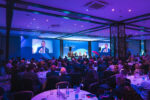
Plan participation in smaller groups, with a clear way to bring their work back into the main room. A large open-floor discussion gives only a fraction of the room time to speak.
Take a 300-person offsite with six people at each table. That’s 50 groups. Giving every table a two-minute report would take 100 minutes before any questions or handovers, so the feedback method needs designing as carefully as the workshop itself.
Ask each group to submit its key recommendation and one unresolved issue in a consistent format. The facilitator can draw out recurring themes and invite selected groups to explain different views.
Choose table groups deliberately. Cross-functional groups suit a question about how departments work together. Regional groups work better when people need to agree a local plan. Neither arrangement needs to last all day.
The practical details matter too. People need a surface to work on, readable instructions and a way to hear the facilitator over the neighbouring table.
What makes a London venue suitable
for a leadership offsite?
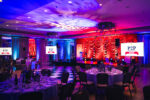
Check the venue against your working agenda and proposed layout. A ballroom’s headline capacity won’t tell you whether people can see the screens, hold table discussions or reach a breakout room in the time allowed.
Ask for a floor plan showing the stage, seating and production position. Pillars, low ceilings and fixed fittings can all affect where the stage and screens should go.
Check the actual breakout rooms you’ll use. A room on another floor can work well, but the programme needs to allow for lifts. Rooms divided by moveable partitions also need checking for sound travelling between sessions.
Privacy deserves a specific conversation. A leadership discussion may involve information that shouldn’t be overheard from a shared foyer. Agree where sensitive sessions happen and who has access.
Travel should shape the shortlist, including whether an early start makes an overnight stay sensible. Our Venues We Trust page is a useful starting point, and we can assess options against your headcount and delivery requirements.

What AV does a leadership
offsite need?
Start with the ways people will contribute: presenting, asking questions, discussing at tables and reporting back. Then agree the equipment list.
Presentations need to be heard and read from the back of the room. A chart that looks clear on a laptop may be too detailed on a large screen, so test slides from the back row.
Questions need a route to the speaker. Roaming mics need people to carry them and clear paths through the seating. Digital questions need a moderator and a reliable connection.
Breakouts need the support their session calls for. A table discussion has different requirements from a workshop with video or remote contributors, and each room needs someone to call if content won’t play. If remote colleagues are taking part, they need to hear the room’s questions and have their contributions brought in by the chair.
Build accessibility into the brief early, including captions and hearing support where needed. The W3C guide to accessible presentations is a useful reference for presenters. If the hotel includes AV, our venue AV versus external production guide explains what to compare before booking more support.

How should you budget for a leadership
offsite in London?
Build the budget around the full event scope. Headcount drives catering and accommodation, while the number of working spaces, production requirements and access hours can change delivery costs substantially.
As a guide, Clownfish’s fully managed company events typically start from £25,000 excluding VAT. Production for a main room and breakouts typically ranges from £15,000 to £75,000 excluding VAT, depending on the rooms, crew and any recording.
Venue and catering
Main room, breakouts, refreshments, meals and any minimum spend.
Accommodation and travel
Who is staying, arrival patterns and any transfers.
Event management
Planning scope, supplier coordination and onsite cover.
AV production
Main room, breakouts, operators, rehearsals and any recording.
Content and facilitation
Who creates the material and who leads the working sessions.
Access and changes
Setup time, room resets, overtime and any extra requirements.
A hotel day-delegate rate is only one part of the picture. Check whether it covers the layout you need, suitable AV and the hours required for setup. A lower room price becomes less attractive if the production has to go in overnight.
Keep a clearly identified contingency, with one person authorised to approve changes. Our event production cost guide gives wider context for technical production.
Who runs the day while your
team takes part?
Give one event lead responsibility for the live running order and supplier coordination. Your internal sponsor can then stay with the discussion, with a clear route for decisions that need their approval.
The facilitator, event lead and production team need different information. A facilitator needs the purpose of each session. The production team needs to know when a video starts, which mic is live and what appears on screen next.
Bring those requirements together in one current running order, including speaker arrivals, mic checks and handovers. Share the latest version with everyone delivering the event.
Agree a simple process for content changes, with one submission route and one person approving replacements. Three versions of “FINAL” is a very familiar problem.
Decide what stays private too. You may want selected presentations recorded, but agree separately whether discussions or breakouts should be captured, and brief the crew on those boundaries.

Where do leadership offsites
lose their value?
- Every department gets a presentation slot. Keep the live programme tied to the purpose and move routine updates into the pre-reading.
- Breakouts have a topic but no task. Tell groups what to produce and how their work will be used.
- The room is booked at maximum capacity. Check the layout with the stage and production space included.
- The closing discussion is treated as spare time. Give decisions and next steps a protected slot with a named owner.
- Nobody owns the follow-up. Agree who will circulate the decisions and check progress before the day takes place.
For an event over several days, our multi-day company conference guide covers the extra logistics.
How do you know the leadership
offsite worked?
Judge the day against its original purpose. Useful measures include decisions recorded, actions assigned and unresolved questions given an owner.
Ask a few specific questions afterwards. Can leaders explain the priorities? Do they know what their team needs to do next? Which issue still needs attention?
Set a follow-up date with the sponsor so the work continues. Our guide to measuring event ROI explains how to connect event measures to the reason you brought people together.

What can Clownfish handle for
your leadership offsite?
We can help find the venue and turn your agenda into a practical event plan. Our event management and production teams coordinate the room requirements, technical setup and delivery on the day, with the scope agreed in your proposal.
If you already have a venue and a capable internal events team, we can work alongside them. Tell us which parts you own and where you want support, including any evening programme.
Bring us in while the format is still taking shape. Reviewing a layout and access schedule early gives you more options than finding a problem after the invitations have gone out.
Read our satisfaction guarantee for the commitment behind our delivery.

Leadership offsite planning questions
What is a leadership offsite?
A leadership offsite brings leaders away from their normal workplace to focus on shared priorities, decisions or ways of working. It can range from a small executive session to a wider company leadership gathering with a main programme and group work.
How do you plan a 300-person leadership offsite at a London hotel?
Start with the hotel’s floor plan and your agenda together. Check that the main room fits 300 with the stage, screens and production desk in place, that enough breakout rooms sit close by, and that lifts and corridors can move everyone in the time allowed. Plan table feedback in a set format so 50 groups don’t turn into hours of reports, and give one event lead the live running order.
How far in advance should we start planning?
Start once you have a credible date range, approximate numbers and an event sponsor. A large gathering with several rooms or overnight stays gives you more to secure, so check venue availability and production access before the date is announced internally.
Should we choose a hotel or a dedicated event venue?
Choose around the programme and travel requirements. A hotel brings bedrooms and meeting spaces together. A dedicated venue may offer a layout better suited to your sessions. Compare the complete arrangement, including access, catering and any transfers.
Do we need an external facilitator?
Consider one when the group needs independent challenge, help with disagreement or support reaching decisions. If an internal leader facilitates, make sure they can give that role enough attention. Event management and facilitation should be scoped separately.
Can Clownfish work with our hotel’s AV team?
Yes. Share what the venue provides and the support already booked. We’ll review the remaining production needs with your team and agree responsibilities before adding equipment or crew.
Does the offsite need to include team building?
Only if it serves the purpose and suits the people attending. Informal time over lunch or dinner may be enough. Where a shared activity would help, give it a clear place in the programme and make taking part comfortable for everyone.
How much does a leadership offsite in London cost?
It depends on headcount, the rooms you need, production and any overnight stays. As a guide, Clownfish’s fully managed company events typically start from £25,000 excluding VAT.
What should we send when asking for a quote?
Send the date, headcount, venue details and the latest agenda. Include room layouts if you have them, what speakers and delegates will contribute, and any evening or residential element. Tell us the available budget and the responsibilities you want the supplier to take on.

Written by
Ellie Perrett
Account Manager
Ellie joined Clownfish in July 2024, bringing years of events experience and a Hospitality Management degree from Surrey. She believes corporate events should be fun, turning the “same old” into grown-up playgrounds that get adults giggling because when people feel good, everything else is easy.
Outside work, Ellie enjoys cooking, working out and honing her wine-tasting skills. Her favourite Clownfish kit is Mario Kart, and her potato of choice? A beef-dripping triple-cooked chip with peppercorn sauce.
Ready to plan your leadership offsite?
Our corporate event management team brings venue finding, production and live delivery together around your agenda. Tell us the date, expected numbers and what your leaders need from the day, and we’ll talk through the support that fits.

