


Can event managers help with government and public event management?
YYes. Councils, universities, shopping centres, and other public bodies bring in event managers to handle the permits, supplier liaison, staffing, and either crowd management or protocol and AV, depending on the type of event, so internal teams can focus on the event’s purpose rather than the logistics behind it.
We’ve delivered family fun days for local councils, community days for shopping centres, and university celebration events for alumni and staff, and the range matters. A council fun day and a university graduation need very different things from an event manager, even though both count as public events. You can see more of the events we’ve brought to life in our case studies.
The short version: Every government and public event runs on public money, faces public scrutiny, and answers to more stakeholders than a private or corporate booking usually does. Budgets tend to be tight against what people expect to see, and the reason for the event matters more than any commercial goal ever would. From there, the challenge splits in two. Open-access events, fun days, festivals, and community celebrations, are about turnout and crowd safety, since nobody can say exactly how many people will show up. Controlled events, graduations, conferences, civic receptions, and awards dinners, are about getting the tone, the AV, and the protocol right when reputations and public funding are on the line. An event manager’s job is the same in both cases: absorb the logistics, bring expertise your team hasn’t had reason to build up, and make sure nothing falls through the cracks.
Where public events go wrong, and where they don’t
| Without an event manager | With an event manager |
|---|---|
| Nobody knows how many people will turn up, so staffing is a guess. | Staffing plans built with contingency, with extra queue barriers and crowd control ready to go if turnout runs high. |
| Power, access, and services are assumed to just be there on the day. | Power and site logistics checked and confirmed at the venue well before the event. |
| Every supplier and the venue get contacted separately, and gaps fall through the cracks. | One team liaising with every supplier and the venue, so nothing gets missed. |
| A civic ceremony or graduation is run with the same tone as any other conference. | Staging, lighting, and pacing built around what the occasion is meant to feel like. |
| VIP arrivals and running order get improvised on the day. | Protocol and VIP handling planned and rehearsed well in advance. |
What do all government and public events have in common?
Whatever the format, four things stay constant.
Public money is involved. Every pound spent needs to be justified, and every choice is more visible than it would be on a private budget.
There’s more than one stakeholder to satisfy. A council event answers to residents, councillors, and the venue. A university event answers to the vice-chancellor’s office, alumni relations, and the students on the day. Corporate events rarely have this many people signing off on the same decision.
Budgets are tight against high expectations. Public bodies are watched closely on spend, but the people turning up still expect the event to look and feel like it mattered.
The reason for the event isn’t commercial. Nobody runs a public event to sell something. There’s a civic purpose, a celebration, or a cause behind it, and that needs to come through in how the day feels, beyond whatever’s written on the running order.
Open-access events: crowds, turnout and safety
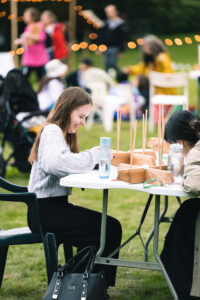
Fun days, festivals, and community celebrations fall into this category, and the challenge is almost always the crowd.
Our team has run family fun days for local councils and residents, and community days for shopping centres. These events don’t have a guest list. Anyone who’s free on the day might turn up, and nobody can say for certain how many that’ll be.
Corporate and private events tend to have peaks and quiet patches through the day. Open-access public events don’t. Crowds can keep flowing steadily from opening to close, which makes it much harder to know how many staff you’ll need on-site and when.
Budget is the second challenge, and it cuts the opposite way to what you’d expect. Public sector budgets for these events are frequently smaller than a comparable corporate spend, yet the crowds they need to serve are often far bigger. Getting that balance right, the right kit and the right number of people, without blowing the budget, is a skill in itself.
Then there’s the risk assessment, which has to satisfy the organiser and the event team in equal measure, covering public safety and crowd management and whatever site-specific hazards come with the location, whether that’s a park, a high street, or an indoor hall.
Controlled events: prestige, AV and protocol
Civic receptions, council award ceremonies, university graduations and conferences, and alumni dinners or staff recognition evenings sit in a different category entirely. There’s no crowd to manage in the same sense. Numbers are known, guest lists are confirmed, and the venue is booked and controlled.
The challenge here isn’t turnout. It’s getting the tone right. A civic ceremony needs a different feel to a graduation, and a graduation needs a different feel to an alumni dinner, even though all three might use similar AV and a similar venue. Get the staging, lighting, and pacing wrong, and an occasion that should feel significant ends up feeling like any other conference.
Protocol matters more here too. VIP arrivals, running order, who’s introduced and when, and how the moment an award is presented or a name is read out actually lands in the room. These details get rehearsed and planned in advance, because there’s no second chance to get a graduation processional right once several hundred people are watching.
Public money and scrutiny apply just as much here as they do to a fun day in a park. A council-run award ceremony still has to justify its cost and match residents’ expectations of what a serious civic occasion should look like. We handle this alongside our awards ceremony production work for corporate clients, so the same expertise carries across.
Can you share examples of government and public events you’ve managed?
A family fun day for a local council, designed to entertain children during the school summer holidays, was busy all day, with none of the natural lulls you’d get at a private party. Our team managed the crowd on the day, and for the events that followed, we brought in extra posts and ropes for queue management based on exactly what we’d learned.
University celebration events for alumni and staff sit at the other end of the scale. Numbers are known in advance, but the pressure is different: getting the tone right for the occasion, running the AV and staging so the moment lands, and keeping to a schedule when senior staff, honoured guests, and a room full of alumni are all watching.
Open-access events rarely go perfectly the first time, since nobody can predict turnout with total accuracy, but a good event manager builds in the fixes, more barriers, tighter queuing, adjusted staffing ratios, before the next one. Controlled events rarely get a next time to fix anything, which is exactly why the planning and rehearsal happen well before the day.

How do event managers add value to government and public events?
They take the liaison work off your plate. An event manager sits between you, the suppliers, and the venue, chasing down everything a successful event needs so you’re not the one fielding ten different phone calls in the run-up to the day.
They also bring expertise your internal team probably hasn’t built up. A council, university, or community group might run one large public event a year, sometimes in a format or at a scale they haven’t handled before. A team that plans smaller events regularly won’t automatically think in terms of crowd flow, contingency staffing, or the protocol a formal occasion needs. That’s the gap an experienced event manager fills, which is why bringing one in tends to avoid problems rather than add expense. Our guide on how professional event planners save you time and stress covers the wider signs that a team needs expert help rather than a volunteer with a spreadsheet.
What mistakes should councils and public organisations avoid?
Underestimating turnout. This is the single biggest risk to an open-access public event. Understaffing because of a low guess on numbers causes real problems on the day, from queue chaos to safety concerns.
Treating budget and safety as separate line items. If money’s tight on an open-access event, the sensible trade-off is often one fewer activity or piece of entertainment in exchange for the extra staff who keep the event running safely.
Assuming a controlled event doesn’t need specialist support because there’s no crowd to manage. Get the tone wrong at a civic ceremony, or the AV and pacing wrong at a graduation, and that’s what the room remembers, not the absence of a queue.
Assuming every public event needs the same approach. An open-access fun day and an indoor awards dinner need different planning entirely. Our piece on what makes a community event successful covers the open-access side in more depth.

When should a council or public organisation bring in a professional event manager?
Bring one in when the event is bigger than what you’d normally run, when it’s happening somewhere you haven’t used before, or when it carries more public scrutiny than your team is used to managing. All three remove the guesswork your team would otherwise rely on from past experience, and that’s where an event manager’s expertise pays off.
What we handle for government and public events
Our team manages the full weight of government and public event delivery: supplier and venue liaison, staffing and crowd management, risk assessment, power and site logistics, and the entertainment and AV that make the day worth turning up for. Because our equipment and crews are in-house rather than hired in from third parties, we can adjust quickly when turnout, timings, or requirements shift close to the date, which happens more often on public events than anywhere else.
We’ve delivered this for local councils, universities, shopping centres, and community groups across London, and we bring the same rigour whether it’s a summer fun day for 500 families or an alumni celebration for a few thousand.
Our fundraising has gone up significantly, a really big step up in our income levels, because of the higher professionalism that we’re delivering with these events.
Chris Hickford MBE, CEO, The Eikon Charity
Frequently asked questions
Can event managers help with government and public events?
Yes. They handle the permits, supplier liaison, staffing, and either crowd management or protocol and AV, depending on the type of event, freeing up internal teams to focus on the event itself rather than the logistics behind it.
What’s different about planning a government or public event compared to a corporate one?
Public money is involved, several stakeholders need to sign off, and budgets are usually tighter against higher expectations. Open-access events add unpredictable turnout, while controlled events like ceremonies and graduations add pressure around tone, AV, and protocol.
What are the biggest challenges in government and public event management?
For open-access events: unpredictable attendance, balancing a public sector budget against a large crowd, and securing power and services outdoors. For controlled events: getting the tone right, matching AV and staging to the occasion, and managing protocol and VIPs.
What’s the biggest mistake public organisations make when planning events?
Underestimating turnout and understaffing as a result, on open-access events. On controlled events, the equivalent mistake is assuming that no crowd means no need for specialist planning.
Should you cut entertainment or staffing if the budget is tight?
On an open-access event, staffing should come first. It’s often better to trim one activity than to cut the team needed to keep a large crowd safe.
When should a council or public body bring in a professional event manager?
A lot more than most people expect. Shifting from warm, low ambient light to a single spotlight on a winner’s name is one of the most effective ways to make a moment feel like an arrival, and we plan those changes deliberately through the night rather than leaving the lighting static throughout.
What’s the difference between an open-access public event and a controlled event like a graduation or ceremony?
Open-access events, such as fun days and community celebrations, bring turnout and crowd safety challenges. Controlled events, such as graduations, conferences, civic receptions, and awards dinners, bring a different set: getting the tone right, matching AV and staging to the occasion, and handling protocol and VIPs. Both draw on the same event management expertise, just applied differently.
What services do event managers provide for government and public events?
Supplier and venue liaison, staffing and crowd management, risk assessment, AV, staging and protocol, and entertainment or production, delivered with the flexibility to adapt quickly when requirements change close to the event date.
Do open-access public events need more staff than corporate events of a similar size?
Often, yes. Open-access events tend to have steadier, all-day crowd flow rather than the natural peaks and quiet periods of a corporate event, which changes how many staff you need on-site and when.

Written by
Kirsty Davidson
Account Manager
Kirsty joined the team as an Account Manager in September 2024, and has since established herself as the undisputed Dance Machine champion and the office’s most vocal Taylor Swift advocate. When she’s not on the golf course, in a yoga class, or at a wine tasting, you’ll find her deep in a good book or making a creative case for why she’d absolutely win Taskmaster. Red (Taylor’s Version, obviously) is the one album she’d take to a desert island. Don’t try to argue with her on this.
Planning a government or public event in London?
We’ve run family fun days, university celebrations, and community events for councils and shopping centres across London, backed by our satisfaction guarantee and more than 600 five-star reviews. If you’re weighing up whether your event needs professional support, we’d like to hear about it.

