


What Does a Conference Production Company Do?
A conference production company plans and delivers the staging, sound, lighting, screens, video, speaker support and live technical operation needed to make a conference run properly.
Trusted by Google, Amazon, Netflix, Spotify and Lloyds


What does a conference production company do, and why might your event need one?
A conference production company plans and delivers the technical, visual and operational elements that make a conference work in the room. That usually includes staging, sound, lighting, screens, video, speaker support, rehearsals, show control and the crew running everything live.
The important part is coordination. A conference is not a collection of separate equipment hire decisions. The stage, microphones, slides, lighting, cameras, videos and speakers all need to work together at the correct moment. When they do, the audience focuses on the content. When they do not, even a strong programme can feel hesitant and disjointed.
The short version: a conference production company turns your agenda into a live event that guests can hear, see and follow. It helps shape the stage, specifies the AV, supports speakers, manages rehearsals, coordinates technical suppliers and runs the show on the day. Smaller single-room conferences may require a focused sound, lighting and staging package. Larger events may add LED screens, live camera relay, multiple rooms, streaming, recording, show-calling and dedicated speaker management. UK conference production costs can range from several thousand pounds for a simple event to tens of thousands for a multi-room or broadcast-style production.
Where Conference Production Falls Flat and Where It Lands
| Where it falls flat | Where it lands |
|---|---|
| The venue is booked before anyone checks sightlines, rigging or power. | The production plan helps shape the room before the layout becomes fixed. |
| Speakers arrive with different slide formats and no proper rehearsal. | Presentations are checked, loaded and rehearsed before the audience arrives. |
| The microphone works at the front but cannot be heard clearly at the back. | Sound is designed around the room, audience and speaker format. |
| One screen is expected to serve a large room with poor sightlines. | Screens, confidence monitors or live relay are specified around what guests need to see. |
| Lighting, sound and video are run by separate teams with no single show caller. | One production plan coordinates every cue and transition. |
The difference is not usually the number of cables in the room. It is whether someone has taken responsibility for the whole live experience.
If you are planning a conference, talk to our production team about the room, programme and audience.
What Does a Conference
Production Company Handle?
A conference production company translates the event brief into a practical production plan. The team needs to understand the speakers, programme, rooms, videos, presentations and what guests need to see and hear.
The scope may include stage and set design, sound systems, microphones, stage lighting, LED screens, presentation playback, video, live camera relay, recording, streaming, show-calling, speaker rehearsals, backstage communications and the technical crew managing setup and pack-down. If remote delegates or recordings are part of the brief, see who can film and live stream your company conference in London.
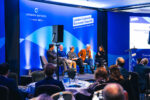
A 60-person leadership meeting may need a clean stage, two microphones and one screen. A 500-person annual conference may need cameras, confidence monitors, a large LED wall, a show caller, video playback and separate breakout technicians.
What Is the Difference Between
Conference AV and Conference
Production?
Conference AV is one part of conference production. AV usually refers to the equipment and operation required for sound, lighting, video and screens. Conference production is the wider process of making those elements work with the agenda, stage, speakers, venue and audience.
An AV supplier may provide microphones, speakers, screens, lighting, cameras and technicians. A production company may also manage the stage layout, visual identity, running order, speaker preparation, rehearsals, cue sheets, breakout rooms and live show control.
The important question is whether the supplier is responsible only for supplying working equipment or for helping the whole conference run properly.
See how Clownfish combines AV, staging and production management.

What Equipment Is Needed
for a Conference?
The equipment depends on the room, audience, programme and level of production.
Sound may include lectern, handheld, headset and lapel microphones, speakers, mixing desks, monitors and backstage communications. Lighting may include stage wash, presenter key lighting, scenic lighting, branded colour and audience lighting.
Screens may display presentations, speaker images, videos, sponsor content, live camera feeds or remote contributors. Projection may suit a controlled room, while LED walls can provide greater brightness and impact. Live camera relay can help larger audiences see the stage clearly.
Staging gives the conference a visual centre. It may include a lectern, risers, branded scenic pieces, backdrops, LED walls, furniture and presenter positions.
Request a conference AV proposal based on your room, audience and programme.

How Does a Conference Production
Company Support Speakers?
Speaker support is one of the most important parts of production. A technically strong room can still feel messy if presenters are not prepared.
A production team may collect presentations, check fonts and videos, load the correct files, confirm microphones, rehearse entrances and exits, mark stage positions, check confidence monitors and manage last-minute changes.
This protects the audience experience. A presentation that has been checked is less likely to open with missing fonts, a video that will not play or slides that cannot be read from the back of the room.
If your conference includes senior executives or important client presentations, ask us about speaker management and rehearsal planning.

How Does Show-Calling
Work at a Conference?
Show-calling is the live coordination of the conference. The show caller or production manager follows the running order and gives cues to the technical departments.
Those cues may include microphone changes, presentation playback, videos, lighting changes, camera cuts, music stings, screen changes, audience lighting and room resets.
The audience should not see the technical work. They should experience a conference that moves with confidence.
See how we coordinate sound, lighting, video and staging through one production plan.
How Much Does Conference
Production Cost in the UK?
Conference production costs depend on guest numbers, venue, rooms, programme length, equipment, crew, staging, rehearsal time and whether the event includes streaming or recording.
| Conference type | Indicative production scope | Broad planning range excluding VAT |
|---|---|---|
| Small single-room meeting | Basic sound, presentation screen, stage wash and technician | From several thousand pounds |
| Mid-size conference | Staging, sound, lighting, screens, presentation management and show crew | Approximately £8,000 to £25,000 |
| Large conference | Larger staging, LED or projection, multiple crew, video playback and speaker management | Approximately £25,000 to £50,000 or more |
| Multi-room or broadcast-style event | Plenary, breakouts, recording, livestreaming and multiple technical teams | £50,000 or more |
These are planning ranges rather than fixed prices. Venue hire, catering, delegate technology and wider event management may sit outside the production quote.
The main cost drivers are guest numbers, rooms, stage design, screens, microphones, cameras, streaming, rehearsal support, crew size, venue access and programme complexity.
Request a conference production proposal based on your actual programme.
What Is the Difference Between
a Small Conference and a Large Conference?
A small conference may take place in one room with a simple stage, several microphones and one main screen. The scale is smaller, but guests still notice poor sound, weak lighting or an awkward stage.
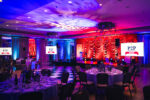
A large conference may include plenary and breakout rooms, multiple presentation formats, cameras, live relay, LED walls, remote contributors, streaming, speaker holding areas, backstage communications and a larger technical crew.
At that scale, the production company becomes part of the event’s operating structure. It coordinates with the venue, organiser, speakers, registration team, catering team and content team.
If you are unsure whether your venue can support the production you want, ask us about venue sourcing and production planning.
When Should You Book a
Conference Production Company?
For a small, straightforward conference, eight to twelve weeks may be enough if the venue and programme are already confirmed.
For a larger conference, three to six months is a safer planning window. Book earlier if the event involves multiple rooms, complex stage design, high-profile speakers, streaming, recording, international contributors, large LED screens, bespoke branding or difficult rigging.
Bringing production in early gives the team a chance to influence venue layout, stage position, sightlines, power, rigging and internet requirements.
Contact the Clownfish team while your conference brief is still taking shape.

What Conference Production
Mistakes Cause Problems?
Booking the venue before checking production requirements: ceiling height, rigging, power and sightlines can limit the design.
Treating AV as a late equipment order: sound, screens and lighting need to support the programme.
Skipping speaker rehearsals: presenters may not know where to stand, how to use the microphone or how their presentation will appear.
Using one screen for a large room: guests at the back may struggle to see slides or video.
Separating departments between unrelated suppliers: nobody owns the handoff between lighting, sound and video.
Ignoring contingency planning: spare microphones, backup files and alternative communication methods protect the programme.
Talk through your programme, venue and technical risks with the Clownfish team.
What Should You Ask a Conference
Production Company?
Before booking, ask:
- What parts of the production are handled in-house?
- Who will manage the event on the day?
- Will you carry out a venue survey?
- How will speakers submit and rehearse presentations?
- What happens if a microphone, screen or playback system fails?
- Are staging, sound, lighting and video included in one proposal?
- Are crew, delivery, setup and pack-down included?
- Can you support breakout rooms, recording or streaming?
- Are prices fixed or can additional charges appear later?
- Do you offer a service guarantee?
Request a clear conference AV proposal covering equipment, crew, setup, rehearsals and contingency planning.
What’s Included in a Conference
Production Booking?
Depending on the brief, a conference production booking may include production planning, technical drawings, venue survey, stage and set design, sound, microphones, lighting, screens, presentation playback, video, camera relay, recording, streaming, speaker support, rehearsals, show-calling, technical crew, delivery, setup, live operation and pack-down.
Clownfish provides conference sound, lighting, video, staging and branding through one experienced team. We own and maintain our equipment, and our technicians are Clownfish-trained rather than freelancers booked for a single day.
For larger events, Clownfish can also support venue sourcing, event management and wider production requirements.
Explore our corporate AV production service or contact the team to discuss your conference.
We’ve earned over 650 five-star reviews on Reviews.co.uk doing exactly this for companies including Google, Amazon, Netflix, Spotify, Atlassian and Lloyds. We also offer a genuine money-back guarantee. If the entertainment or production does not engage guests, equipment fails or our hosts underdeliver, you do not pay for that part of the service. Read the Clownfish guarantee.

Frequently asked questions
What does a conference production company do?
A conference production company plans and delivers the staging, sound, lighting, screens, video, speaker support, rehearsals, show-calling and technical crew needed to run a conference successfully.
What is the difference between conference AV and conference production?
Conference AV focuses mainly on technical equipment and operation. Conference production includes wider planning, stage design, programme coordination, speaker management, rehearsals and live show control.
What equipment is needed for a conference?
Most conferences need sound, microphones, stage lighting, presentation screens and staging. Larger events may also require LED walls, cameras, confidence monitors, video playback, streaming and recording.
How much does conference production cost in the UK?
Small conferences may cost several thousand pounds. Mid-size conferences commonly require around £8,000 to £25,000, while larger or multi-room events can cost £25,000 to £50,000 or more.
How far in advance should a conference production company be booked?
Small events may work with an eight to twelve-week lead time. Larger conferences should ideally be planned three to six months ahead.
Can a conference production company provide the venue?
Some conference production companies can help source a suitable venue. Clownfish can help find a space that fits your guest numbers, location, budget and technical requirements. The production team can then advise on sightlines, rigging, power, stage layout and access before you confirm the booking.
Should conferences be livestreamed?
Livestreaming can extend the reach of a conference to remote colleagues, clients or stakeholders. It requires suitable cameras, audio feeds, internet capacity and a crew that understands broadcast requirements.
Who manages speakers at a conference?
The production team may support presentation collection, technical checks, rehearsals, microphone selection, stage positions and show cues. Confirm whether speaker management is included in the proposal.
What happens if something goes wrong during the conference?
A professional production plan should include contingency equipment, backup files, tested playback, clear communications and an experienced technical lead. Clownfish also backs its production work with a money-back guarantee.

Written by
Rebecca Wheatley
Senior Account Manager
Rebecca joined Clownfish in October 2025 and has been keeping a hundred moving parts on track without breaking a sweat ever since. Off the clock, she’s a performing arts enthusiast and self-confessed traveller equally at home on a stage, on a plane, or dangerously close to a coffee machine. Ask her about the manatee thing. She has a theory.
Ready to get a quote for your event?
We plan and deliver corporate conference production using our own technical equipment and Clownfish-trained teams. Our work covers sound, lighting, video, staging, branding, speaker support and live show control. Request your conference production proposal or explore our corporate AV production service.

